Black Myth: Wukong — How a Chinese Game Made the World Read Journey to the West
The Game That Made the World Googling “Journey to the West”
When Black Myth: Wukong launched on August 20, 2024, it sold 10 million copies in three days. Within a month, that number passed 20 million. It became the most-played single-player game on Steam ever, peaking at 2.4 million concurrent players — a number that put it ahead of Cyberpunk 2077, Elden Ring, and Grand Theft Auto V.
But the more remarkable story isn’t in the sales figures. It’s in what happened next: millions of non-Chinese players, many of whom had never heard of Journey to the West, started reading the original 500-year-old novel, watching explanatory videos, and debating the finer points of Daoist cosmology on Reddit.
Black Myth: Wukong didn’t just sell a game. It sold a culture.
Who Is Sun Wukong, and Why Does He Matter?
Sun Wukong — the Monkey King — is arguably the most beloved character in all of Chinese literature. Born from a stone egg atop the Mountain of Flowers and Fruit, he gains supernatural powers through years of cultivation under a Daoist master, then storms Heaven itself when the gods refuse to grant him equal rank.
He is rebellious, arrogant, hilariously vain, and profoundly powerful. The Jade Emperor’s entire celestial army cannot subdue him. Only the Buddha himself can — by trapping Wukong under Five Elements Mountain for 500 years, until a traveling monk releases him as punishment-turned-redemption.
This is the opening arc of Journey to the West (西游记), one of China’s Four Great Classical Novels, written by Wu Cheng’en in the 16th century during the Ming Dynasty. The novel follows the Tang Dynasty monk Xuanzang on his pilgrimage to India to retrieve Buddhist scriptures, accompanied by Wukong and two other disciples — the pig demon Zhu Bajie and the river demon Sha Wujing.
The novel is 100 chapters of monsters, battles, humor, and philosophical allegory. It has been adapted into hundreds of films, TV series, operas, and animations. But until Black Myth: Wukong, no adaptation had made Western audiences actually want to read the book.
What the Game Does Differently
Black Myth: Wukong isn’t a retelling of Journey to the West. It’s a sequel — set after the pilgrimage is complete, after Wukong has achieved Buddhahood, and after he has been stripped of his title and power for reasons the game slowly unveils. Players control a new protagonist, the “Destined One,” who retraces Wukong’s path, battling the legendary yaoguai (demons) from the original novel along the way.
This structural choice is brilliant. It assumes you don’t know the story — and then makes you want to know it. Every boss you fight is a character from the novel. Every environment is a location from the pilgrimage route. The game doesn’t explain who the Bull King is, or why the Spider Sisters matter, or what the Flaming Mountains represent. It simply presents them — vividly, beautifully, terrifyingly — and lets curiosity do the rest.
And curiosity did the rest. Players who couldn’t read Chinese turned to the 1.21-million-view video above — a comprehensive 64-minute lore explainer by YouTuber NeddyTheNoodle — and to English translations of the novel, and to Reddit threads breaking down each chapter’s cultural references.
The Yaoguai: Chinese Monster Design Goes Global
One of the game’s most celebrated aspects is its bestiary. Chinese mythology has a rich tradition of yaoguai — spirits, demons, and shape-shifters who can be malevolent, tragic, or absurdly comic. Unlike Western fantasy monsters, which tend toward the grotesque, yaoguai are often deeply human: they were once animals or objects that gained sentience through cultivation, and their motivations — jealousy, love, ambition — mirror human flaws.
The game’s boss fights are not just combat encounters; they’re character studies. The White Snake Spirit is a grieving mother. The Tiger Vanguard is a disgraced warrior seeking redemption. The Hundred-Eyed Daoist is a cautionary tale about greed. Each fight reveals a fragment of a story that, when pieced together, forms a mosaic of Chinese folk imagination.
Western game critics, accustomed to the monster design of Dark Souls and The Witcher, were unanimous: this was something new. Not because the mechanics were revolutionary — they weren’t — but because the source material was unfamiliar, and that unfamiliarity was thrilling.
The Architecture, the Music, the Silence
Black Myth: Wukong is also a virtual museum of Chinese cultural heritage. The development team at Game Science spent years scanning real-world temples, pagodas, and grottoes across China — from the Yungang Grottoes in Shanxi to the Feihong Pagoda in Shanxi province. Many of these sites are remote, rarely visited even by Chinese tourists, and facing the slow erosion of time.
The game’s soundtrack is equally grounded. Traditional instruments — guzheng, pipa, suona, erhu — are used not as exotic flavoring but as the primary musical language. The suona, a piercing double-reed horn often called “the instrument that rules Chinese funerals,” features prominently in boss fight music — a choice that unsettled Western players in exactly the way a battle with a demon should.
And then there’s the silence. The game is full of it — the quiet of a mountain temple at dawn, the hush of a bamboo forest, the stillness before a boss reveals itself. In a medium that has increasingly equated “immersion” with “constant stimulation,” this restraint feels distinctly Chinese. It’s the aesthetic of ink wash painting: what you leave out matters as much as what you put in.
Why This Game Matters Beyond Gaming
Black Myth: Wukong proved something that Where Winds Meet would later confirm: that cultural specificity is not a commercial liability but a competitive advantage. Players didn’t buy the game despite its Chinese identity. They bought it because of it.
For decades, the global gaming industry operated on an unspoken assumption: to reach a worldwide audience, a game needed to strip away culturally specific elements and aim for a “universal” (read: Western) aesthetic. Black Myth: Wukong shattered that assumption. It was unapologetically, almost defiantly Chinese — in its story, its art, its music, its philosophy — and the world didn’t just accept it. The world lined up at midnight to play it.
The lesson is simple, and it extends far beyond gaming: when you make something with genuine cultural depth, you don’t need to translate the culture out of it. You need to make it good enough that the world translates the culture in.
Explore more: Xiangqi — Chinese Chess · shadow puppetry’s epic storytelling
Sources: Journey to the West on Wikipedia · Sun Wukong on Wikipedia
You May Also Like
 1:09
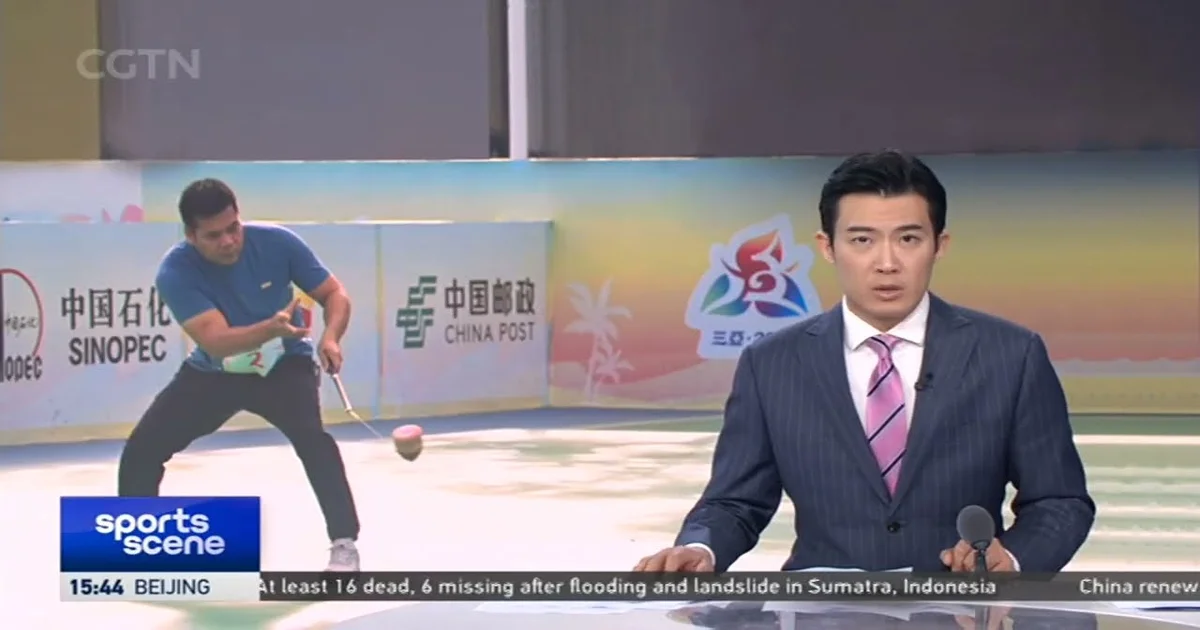
1:09 Chinese Top-Spinning: A 4,000-Year-Old Game Still Spinning Today
 5:52
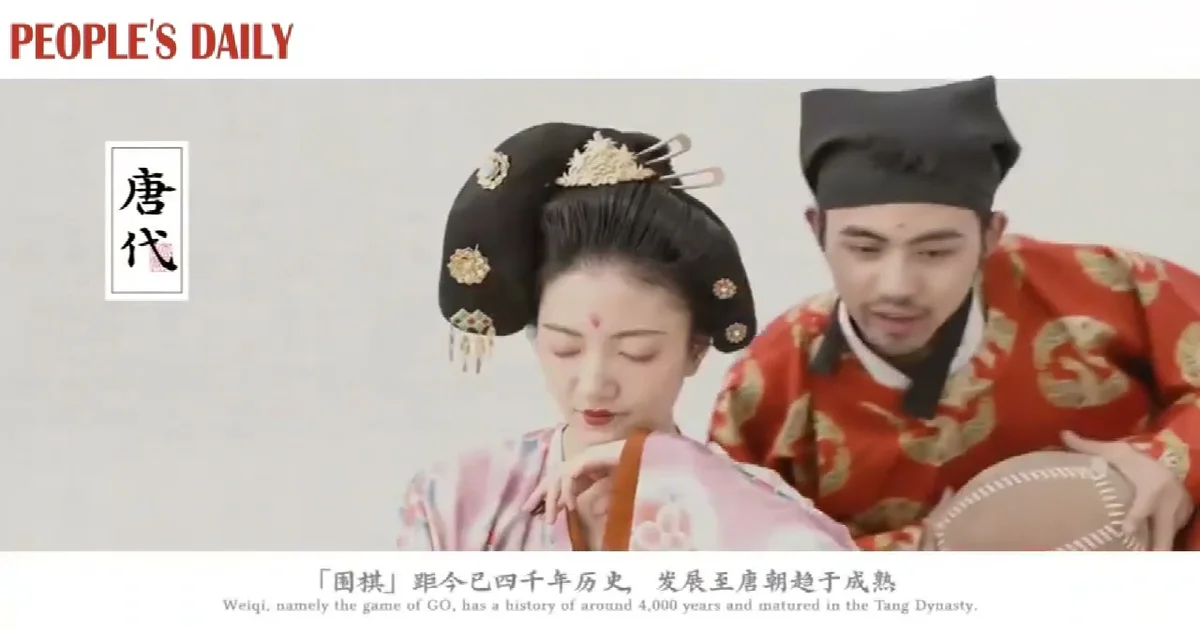
5:52 Cuju: The 2,000-Year-Old Chinese Game That Gave Birth to Football
 4:32
4:32 The Nine Linked Rings: China's Mathematical Puzzle That Stumped the World
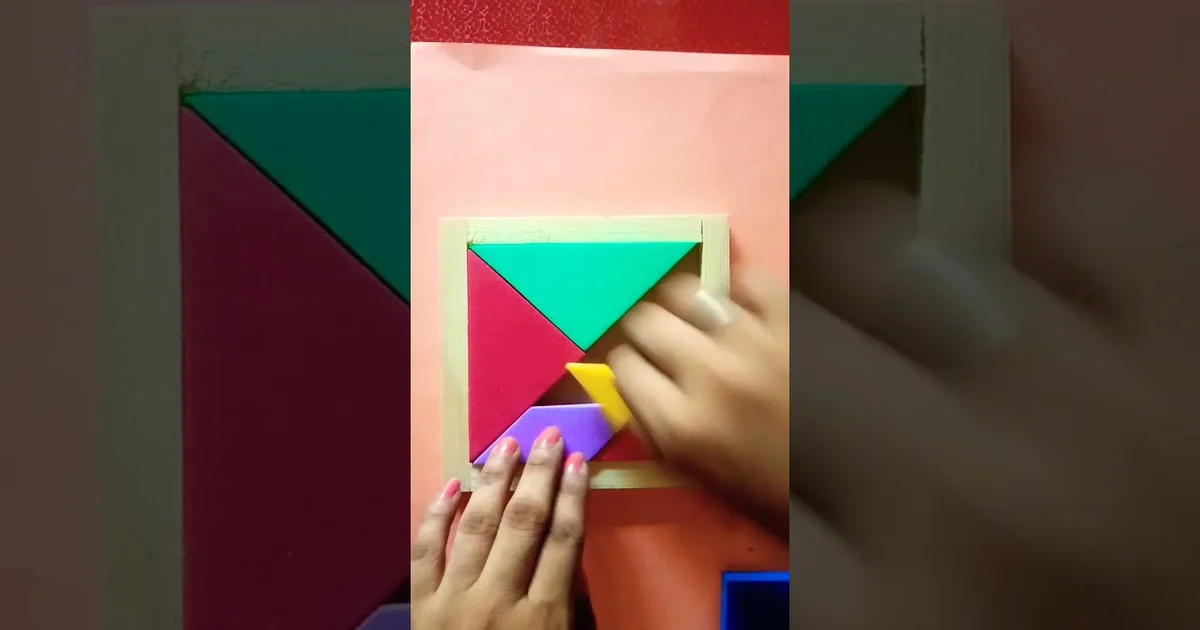
Tangrams: The 3,000-Year-Old Puzzle That Taught China Geometry Before Euclid
Recommended Products
Products related to this topic, automatically recommended by Amazon:
As an Amazon Associate, we earn from qualifying purchases.