Tangrams: The 3,000-Year-Old Puzzle That Taught China Geometry Before Euclid
Seven Pieces, Infinite Possibilities
There is a puzzle that consists of exactly seven flat shapes — five triangles, one square, one parallelogram — that together form a perfect square. Separated, they can be rearranged to create thousands of recognizable figures: cats, houses, running men, sailing ships, birds in flight, warriors with swords.
This is the 七巧板 (qīqiǎobǎn) — literally “seven boards of skill.” Known globally as the tangram, it is arguably the oldest dissection puzzle still in active use today, predating jigsaw puzzles by over a millennium and teaching geometric principles that Euclid wouldn’t formalize until centuries after the tangram’s invention.
The Legend of the Broken Tile
The most famous origin story involves a tile maker named Tan who dropped a ceramic floor tile, which shattered into seven pieces of precise geometric proportions. As he tried to reassemble the square, he discovered that the seven fragments could form countless other shapes. He began creating pictures with the pieces, showing them to friends, who were fascinated by the challenge.
Historians consider this story apocryphal — too convenient, too neat. The real origins trace to the Song Dynasty (960–1279 CE), when furniture makers developed a system of geometric cutting patterns for decorative inlay work. The seven shapes emerged naturally from dividing a square along its most fundamental lines of symmetry: the diagonals, the midlines, and the perpendicular bisectors.
What makes the tangram mathematically elegant is that these seven pieces contain no redundancy. Each piece contributes a unique proportion of area that cannot be replicated by combining the others. The two large triangles each occupy one-quarter of the total area. The medium triangle occupies one-eighth. The two small triangles each occupy one-sixteenth. The square and parallelogram each fill one-eighth. Together: 1/4 + 1/4 + 1/8 + 1/16 + 1/16 + 1/8 + 1/8 = 1. Perfect closure.
The Puzzle That Crossed the World
The tangram remained a Chinese curiosity for nearly 800 years before reaching the West. In the early 19th century, American and European traders encountered the puzzle in Cantonese tea houses, where it was used as a parlor game among merchants waiting for their shipments. They brought it home.
What followed was the first global puzzle craze. By 1818, tangram books were being published in France, Germany, Italy, Britain, and the United States simultaneously. Lewis Carroll owned a tangram set. Napoleon Bonaparte, during his exile on Saint Helena, reportedly spent hours solving tangram puzzles. Edgar Allan Poe was said to be an enthusiast.
The Western name “tangram” itself is a mystery. Some scholars believe it derives from “Tang” (referencing the Tang Dynasty) plus the Greek suffix “-gram” (meaning “written character”). Others argue it comes from the Cantonese phrase “trankam,” meaning “an odd-shaped person.” Neither theory is confirmed. The Chinese name 七巧板 — “seven clever boards” — is both more descriptive and more humble.
What the Tangram Teaches Without Words
Before children learn formal geometry, the tangram teaches them intuitively that:
- Area is conserved regardless of arrangement (the seven pieces always sum to the same total)
- Complex shapes decompose into simpler components
- Rotation and reflection produce distinct configurations
- Some problems have multiple valid solutions while others have none
Educational researchers have studied the tangram extensively. A 2020 meta-analysis found that spatial reasoning training with tangrams improved mathematics scores in elementary students by an average of 12% compared to control groups. The effect was strongest in geometry and measurement — precisely the domains the tangram was designed to illuminate.
But the tangram’s deepest lesson isn’t mathematical. It’s philosophical. The same seven pieces can make a rabbit or a runner, a house or a horse. Meaning is not inherent in the material; it emerges from arrangement. This is a concept that resonates far beyond puzzles — it’s visible in language, in music, in the way societies organize themselves from the same basic elements into radically different structures.
The Modern Tangram Renaissance
Digital versions of the tangram number in the thousands across app stores. Physical sets have evolved beyond wood and cardboard: magnetic travel editions, acrylic luxury sets with felt-lined boxes, giant foam versions for classroom use, and even edible chocolate tangrams.
Competitive tangram solving exists. The World Puzzle Championship includes tangram categories. Speed-solvers can assemble complex figures in under 30 seconds. The current record for solving 10 random tangram figures stands at under 4 minutes.
Yet the original appeal remains unchanged: seven simple pieces, a flat surface, and the quiet satisfaction of finding order in chaos. In a world of infinite digital entertainment, the tangram endures because it does something screens cannot — it puts geometry in your hands.
Explore more: Weiqi (Go) strategy
Sources: Tangram on Wikipedia
You May Also Like
 1:09
1:09 Chinese Top-Spinning: A 4,000-Year-Old Game Still Spinning Today
 5:52
5:52 Cuju: The 2,000-Year-Old Chinese Game That Gave Birth to Football
 4:32
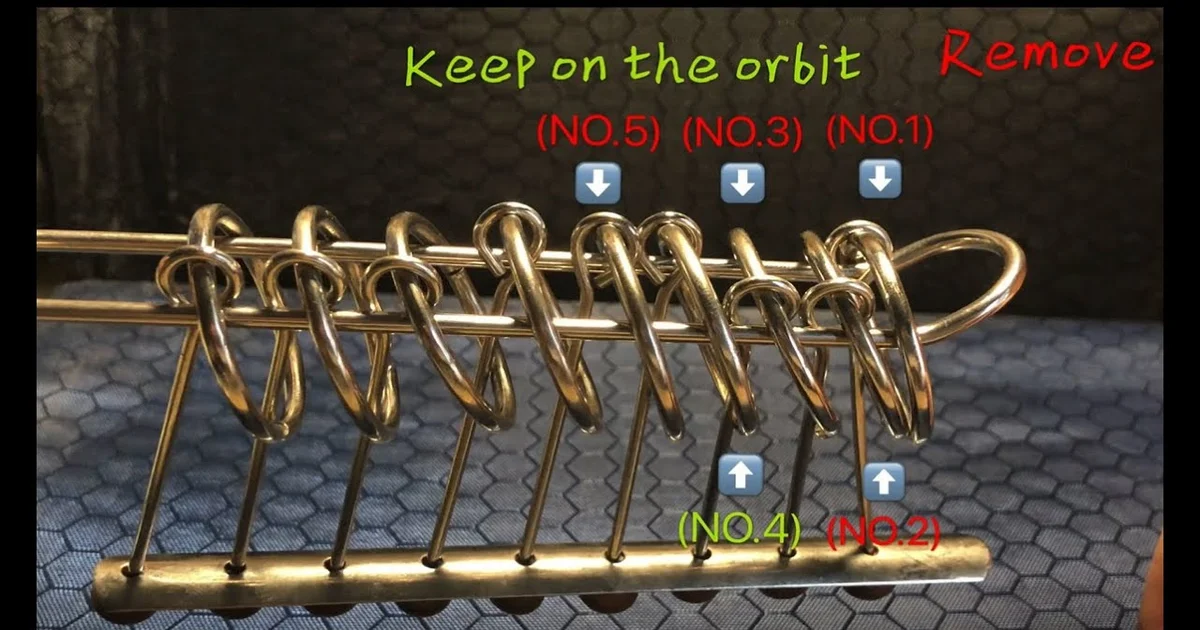
4:32 The Nine Linked Rings: China's Mathematical Puzzle That Stumped the World
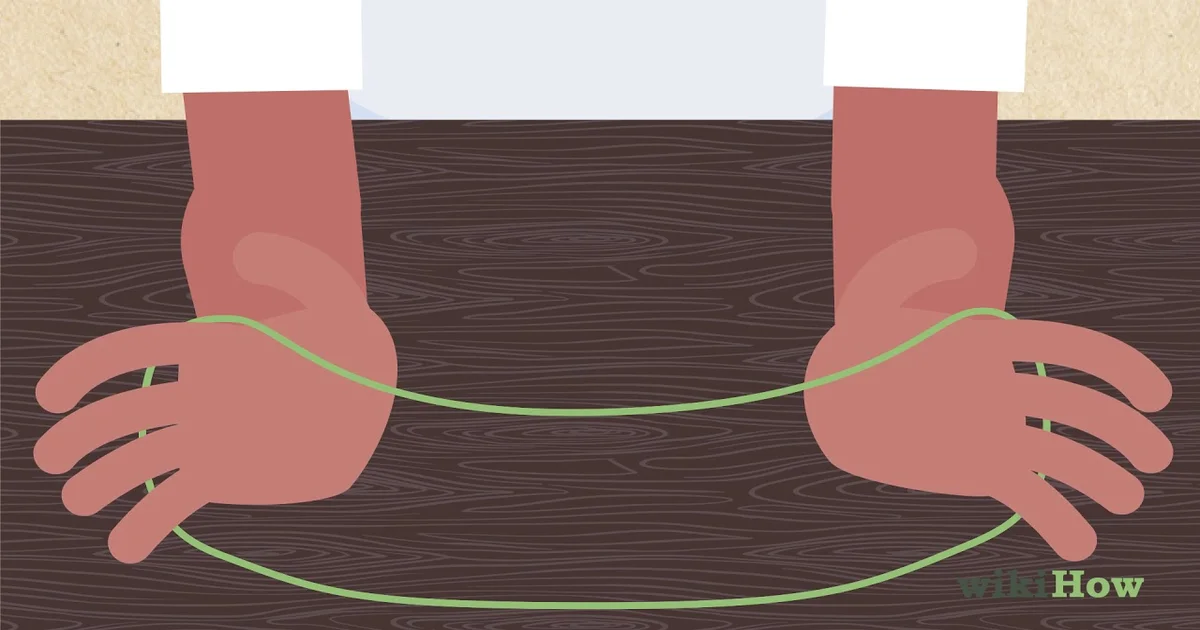
Cat's Cradle — The String Game That Turns Two Hands Into Art
Recommended Products
Products related to this topic, automatically recommended by Amazon:
As an Amazon Associate, we earn from qualifying purchases.