Dragon Boat Racing: 2,300 Years of Drums, Sticky Rice, and Perfect Synchronicity
Every fifth day of the fifth lunar month, rivers across China erupt with the sound of drums. Long, narrow boats — painted like dragons, with fierce heads and scaled tails — slice through the water powered by teams of 20 to 80 paddlers moving in perfect synchronization. On shore, crowds scream. Zongzi (sticky rice dumplings) are devoured by the millions. Children wear sachets of medicinal herbs to ward off evil.
This is the Dragon Boat Festival (端午节, Duanwu Festival) — and while the boat racing is the spectacle, the story behind it is one of the most powerful in Chinese history.
The Poet Who Drowned for His Country
The festival commemorates Qu Yuan (屈原, 340–278 BCE), a poet and minister of the Chu state during the Warring States period. Qu Yuan was a patriot who warned his king about the growing threat of the Qin state. The king ignored him, exiled him, and allied with Qin instead. Qin betrayed the alliance, invaded Chu, and sacked the capital.
Upon hearing the news, Qu Yuan walked to the Miluo River, embraced a heavy stone, and drowned himself. The date was the fifth day of the fifth lunar month.
According to legend, local fishermen raced their boats to the spot to save him — but they were too late. To prevent fish from eating his body, they beat drums to scare them away and threw balls of sticky rice into the water. The boat race and the zongzi both trace back to this moment.
2,300 Years of Racing
Dragon boat racing has evolved from a rescue attempt into a globally competitive sport:
- Traditional races: Held in rivers and lakes across China, with boats up to 30 meters long carrying 80+ paddlers. The largest festival races draw hundreds of teams and tens of thousands of spectators.
- International competition: The International Dragon Boat Federation (IDBF) holds world championships every two years, with teams from over 60 countries. The sport debuted as a demonstration event at the 2024 Paris Olympics.
- Hong Kong International Dragon Boat Races: The most prestigious festival race, held annually in Victoria Harbour since 1976. The 2026 edition featured over 200 teams from 30 countries.
The Physics of Synchronization
A dragon boat is not fast because its paddlers are strong — it is fast because they are synchronized. A team of 20 average-strength paddlers in perfect sync will beat a team of 20 stronger paddlers who are out of rhythm. The drummer at the bow sets the stroke rate; the steersman at the stern keeps the boat straight.
Studies by sports scientists have shown that a well-synchronized dragon boat team achieves 12-15% more propulsion than the same team with even slight timing errors. The boat literally surges forward with each unified stroke — and stalls when even two paddlers are out of phase.
Zongzi: The Food That Started It All
No Dragon Boat Festival is complete without zongzi — glutinous rice wrapped in bamboo or reed leaves, tied with string, and boiled or steamed for hours. The fillings vary by region:
| Region | Style | Key Ingredients |
|---|---|---|
| Northern China | Sweet | Red bean paste, dates, sugar |
| Southern China | Savory | Pork belly, salted egg yolk, chestnut |
| Guangdong | Deluxe | Abalone, mushroom, dried shrimp |
| Taiwan | Mixed | Peanuts, pork, pickled radish |
Making zongzi is a family ritual — grandparents teach grandchildren how to fold the leaves into a perfect tetrahedron, fill it, and tie it. The shape itself is engineering: the tetrahedron is the most efficient packing shape for a given amount of leaf material.
More Than a Race
The Dragon Boat Festival was inscribed on UNESCO’s Intangible Cultural Heritage list in 2009 — the first Chinese festival to receive this recognition.
In an age of individual achievement, dragon boat racing stands apart. There are no star athletes. The drummer is anonymous. The paddlers are interchangeable. The only thing that matters is whether 20 people can move as one. Qu Yuan died because his country could not unite. The sport that commemorates him demands exactly what his country lacked: unity.
Related stories:
- Spring Festival: The 15-Day Holiday That Moves 2 Billion People
- Mid-Autumn Festival: Why the Chinese Look at the Moon and Think of Home
- Qingming: How the Chinese Talk to Their Ancestors Once a Year
Sources:
You May Also Like
 8:15
8:15 Hanshi Festival: The Cold Food Tradition That Birthed Qingming
 5:32
5:32 Huazhao Festival: China's Flower Birthday Celebration
 6:45
6:45 Shangsi Festival: China's Forgotten Valentine's Day on the Double Third
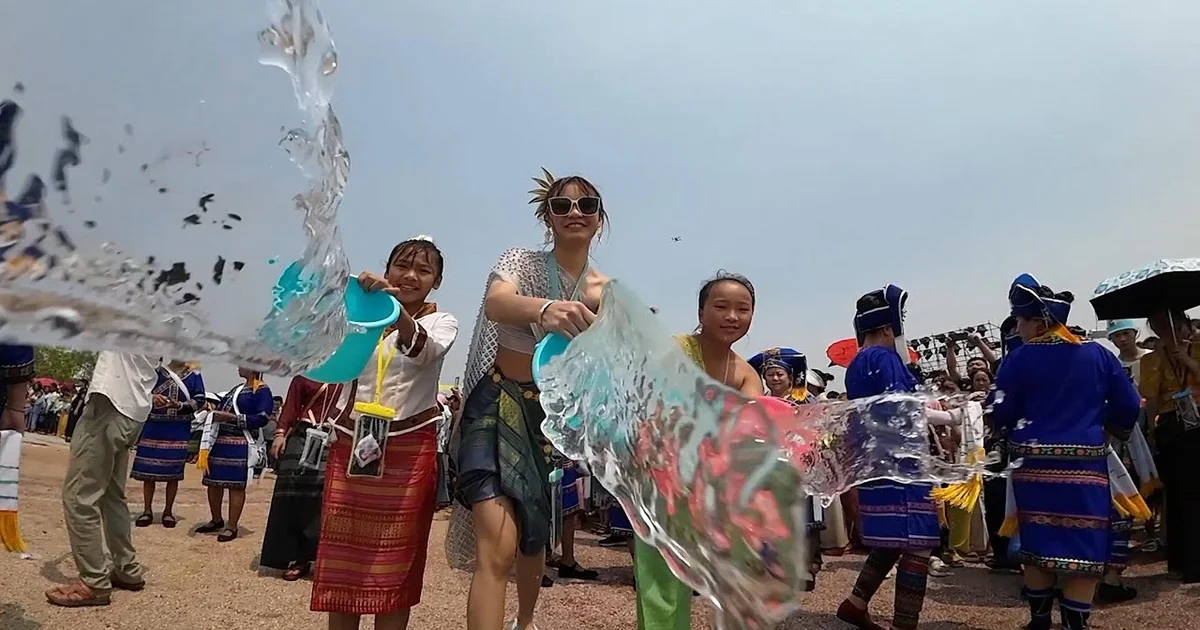
Water Splashing Festival — When 10,000 People Celebrate Together
Recommended Products
Products related to this topic, automatically recommended by Amazon:
As an Amazon Associate, we earn from qualifying purchases.