The Legend of Nien: How a Monster Gave Birth to Chinese New Year
The Beast That Haunted Every Winter
Long before fireworks lit up the sky and red paper cutouts adorned doorways, there was fear. Deep in the mountains of ancient China, a creature called Nien emerged at the end of every winter — a monstrous beast with a gaping mouth that could swallow entire villages in a single night. Crops vanished. Livestock disappeared. Families huddled behind locked doors, praying for dawn.
The word “nien” (年) in Chinese simply means “year.” Think about that for a moment: the Chinese word for year is also the name of a monster. Every passing year is, symbolically, the defeat of something terrifying. That’s not just etymology — it’s a philosophy baked into the language itself.
How Fear Became Celebration
According to the legend, villagers eventually discovered Nien’s weaknesses. The beast couldn’t stand loud noises. It recoiled from the color red. Fire frightened it away. And so, the strategy shifted from hiding to defiance.
People began pasting red couplets on their doors. They lit bamboo stalks that cracked and exploded — the ancestors of today’s fireworks. They beat drums and gongs through the night. When Nien crept down from the mountain, it was met not with trembling silence but with a wall of sound and crimson. The monster turned back, never to return.
This is the origin story behind every Chinese New Year tradition you see today. The red envelopes? Not just gifts — they’re talismans. The midnight firecrackers? Not just spectacle — they’re weapons against darkness. The all-night vigil called shou sui? That’s the original neighborhood watch, born from genuine terror that slowly transformed into communal joy.
Why the Legend Still Matters
What makes the Nien story endure isn’t the monster itself. It’s what the victory represents. Every culture has its dark season — a time of cold, scarcity, and uncertainty. The Chinese response was to meet that darkness with color, noise, and collective defiance.
There’s something deeply modern in that logic. When the world feels overwhelming, the answer isn’t to hide. It’s to gather with your people, dress in your brightest clothes, and make enough noise to chase the shadows away. The ancient Chinese didn’t just survive winter — they threw it a going-away party.
Psychologists might call it “reframing.” Anthropologists might call it a “ritual of renewal.” But at its heart, the Spring Festival is an act of radical optimism: the conviction that no matter how dark the night, morning will come, and it will be worth celebrating.
From Myth to Living Tradition
Today, nearly two billion people around the world observe some form of Lunar New Year celebration. In cities from Beijing to San Francisco, the same elements appear — red decorations, communal feasts, explosive sounds — each one a echo of that ancient standoff between villagers and a monster.
The Nien legend reminds us that traditions don’t survive by accident. They survive because they answer something real in the human experience. The fear of winter. The hunger for light. The need to believe that together, we can face down anything.
So the next time you see a dragon dance through city streets, or hear firecrackers split the winter air, remember: you’re not just watching a celebration. You’re watching a 4,000-year-old victory lap.
Explore more: Spring Festival’s 15-day traditions · the lion dance tradition
Sources: Nian monster on Wikipedia · Chinese New Year on Wikipedia
You May Also Like
 3:42
3:42 Drones Save Lives in China Floods: Heavy-Lift UAVs Airlift People and Supplies When Roads Vanish
 3:03
3:03 Europe's Heatwave Crisis: How Chinese Cooling Wisdom Outperforms Air Conditioning
 1:33
1:33 Saturation Rescue: How China Rewrites the Rules of Disaster Response
 3:21
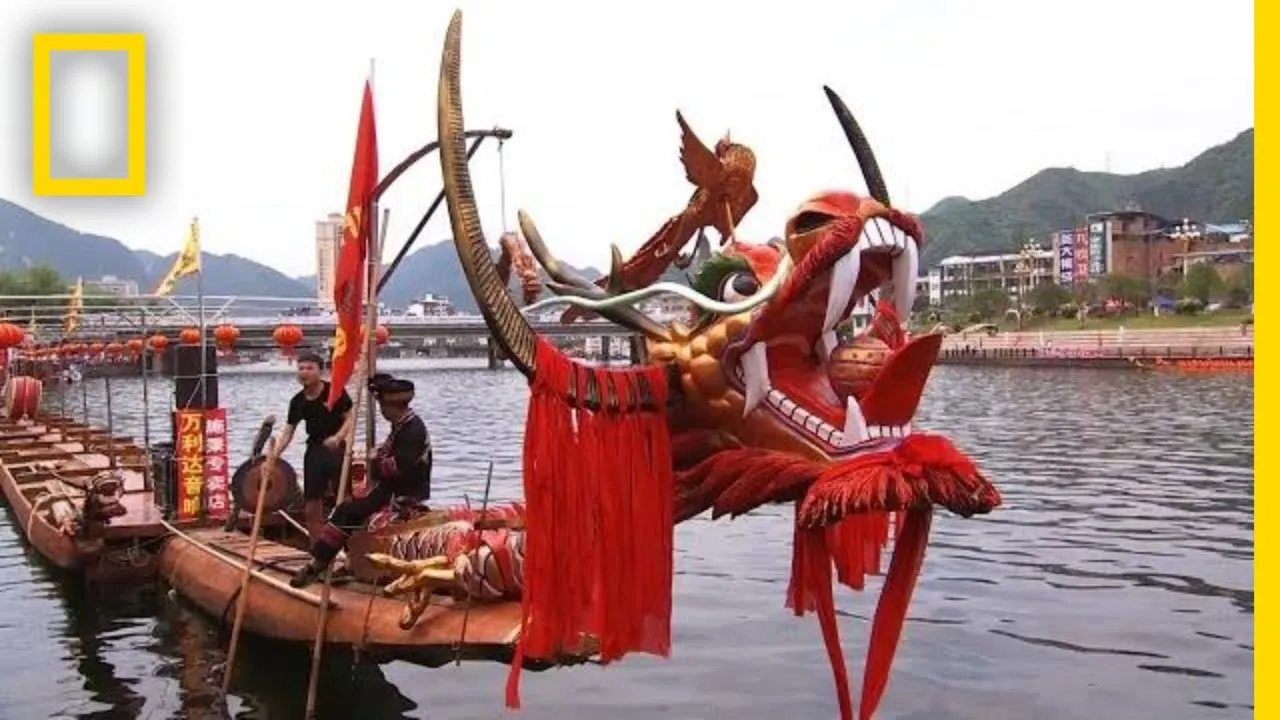
3:21 Dragon Boat Races: The Ancient Sport Born From Grief
Recommended Products
Products related to this topic, automatically recommended by Amazon:
As an Amazon Associate, we earn from qualifying purchases.