Chinese New Year Lion Dance in Hong Kong — The Heartbeat of Spring Festival
When the Lions Take the Streets
Every Chinese New Year, Hong Kong transforms. Neon-lit streets give way to drumbeats, and crowds pack sidewalks to watch something they’ve seen since childhood yet never tire of — the lion dance. The video above captures this electrifying moment: performers in ornate lion costumes leaping between poles, blinking their enormous eyes at delighted children, and marching through neighborhoods as firecrackers echo between high-rise towers.
This isn’t performance art for tourists. It’s a living ritual that has been repeated for over a thousand years, and in Hong Kong, it reaches a scale and intensity found nowhere else.
What the Lion Dance Really Means
The lion dance (舞狮) is not, strictly speaking, Chinese. The lion is not native to China — the animal was introduced through Silk Road trade and Buddhist iconography from India. But over centuries, the Chinese made the lion their own, building an entire tradition around a creature they had never seen in the wild.
There are two main styles. The Northern lion dance features performers in full-body shaggy costumes, often performing acrobatics on elevated platforms. The Southern lion dance — the kind seen in Hong Kong — is more theatrical: the lion head is oversized, brightly painted, and operated by two performers who bring it to life with blinking eyes, twitching ears, and a mischievous personality.
The Southern lion comes in two sub-styles: the Fut Shan (Buddha Mountain) lion with its sharp, angular head, and the Hok Shan (Crane Mountain) lion with a rounded forehead. In Hong Kong, you’ll see both, often competing in the same parade.
Why Hong Kong Does It Best
Hong Kong’s lion dance culture is the world’s most intense for a simple reason: competition. The city hosts dozens of lion dance tournaments every year, and the performers are professional athletes, not hobbyists. Teams train year-round, and the best ones perform stunts that would make Cirque du Soleil nervous — leaping between poles three meters high, flipping mid-air while holding the lion head, and landing on platforms barely wider than a dinner plate.
The Hong Kong International Lion Dance Championship, held annually, draws teams from across Asia. The routines are judged on difficulty, synchronicity, and the lion’s expressiveness — can the performers make the lion look curious? Playful? Frightened? Angry? The best teams make you forget there are humans underneath.
The Ritual Beneath the Spectacle
Before the performance begins, there’s the dotting of the eyes (点睛). A respected community leader dips a brush in red ink and dabs the lion’s eyes, awakening its spirit. Only after this ceremony can the lion perform. It’s a moment of genuine reverence — even the most competitive teams pause and bow before the ritual.
Then comes the cai qing (采青), or “plucking the greens.” The lion approaches a head of lettuce tied to a pole or doorway, “eats” it, and spits out the leaves — a symbol of spreading good fortune. Inside the lettuce, there’s always a red envelope (红包, hongbao) containing money, the performer’s reward and a gesture of reciprocity between host and performer.
This exchange captures something essential about Chinese New Year: it’s not just about celebration. It’s about relationship. The lion dance is a gift from the performers to the community — a blessing delivered through sweat and skill — and the red envelope is the community’s gratitude returned.
The Drums That Make the Lion Breathe
No discussion of the lion dance is complete without the percussion. A single large drum, a set of cymbals, and a gong — that’s all. But the rhythm they produce is what makes the lion feel alive. The drum slows when the lion is cautious. It accelerates when the lion is excited. It crashes when the lion leaps. The performers don’t count beats; they listen and respond, creating a conversation between drummer and dancer that audiences feel in their chests.
In Hong Kong’s narrow streets, the sound bounces off buildings and amplifies until the entire neighborhood vibrates. There is nothing passive about watching a lion dance. You are inside it.
A Tradition That Refuses to Die
In an era of screens and virtual entertainment, the lion dance should, by all logic, be fading. Instead, it’s growing. Young people in Hong Kong and across the Chinese diaspora are joining lion dance teams at record numbers. Social media has given the art form global reach — TikTok clips of pole-jumping lions routinely go viral, introducing millions to a tradition they never knew existed.
The reason is simple: the lion dance is not a museum piece. It’s alive. It evolves, competes, surprises, and — most importantly — requires you to stand in a crowd and feel the drums in your bones. No algorithm can replace that.
Explore more: Spring Festival’s 15-day ritual · the legend of the Nien monster
Sources: Lion dance on Wikipedia · Chinese New Year traditions (UNESCO)
You May Also Like
 3:42
3:42 Drones Save Lives in China Floods: Heavy-Lift UAVs Airlift People and Supplies When Roads Vanish
 3:03
3:03 Europe's Heatwave Crisis: How Chinese Cooling Wisdom Outperforms Air Conditioning
 1:33
1:33 Saturation Rescue: How China Rewrites the Rules of Disaster Response
 3:21
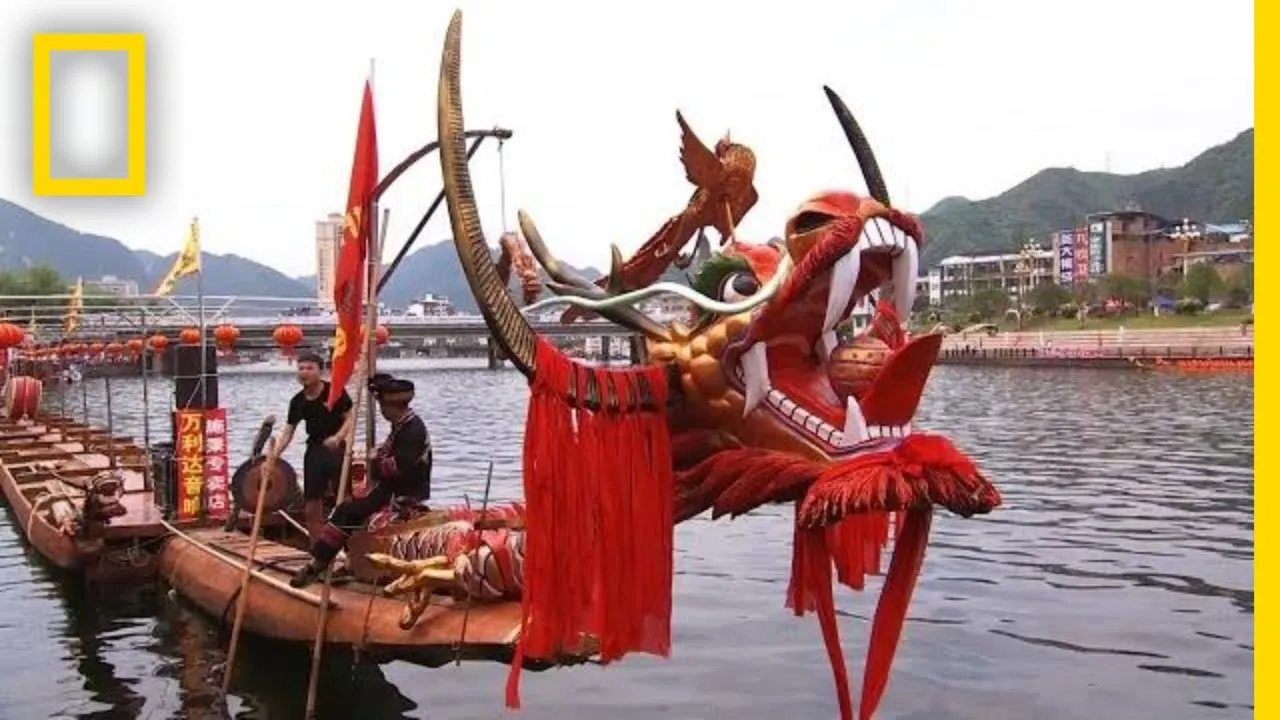
3:21 Dragon Boat Races: The Ancient Sport Born From Grief
Recommended Products
Products related to this topic, automatically recommended by Amazon:
As an Amazon Associate, we earn from qualifying purchases.